
The disruption context is real. Statistics Canada reports that 20.6% of manufacturers expected supply-chain obstacles in early 2025. Downtime is getting costlier too: Siemens found that heavy-industry hourly downtime costs are four times their 2019 level.
This guide covers what a long-term partner is, how to evaluate one, and how D&D Custom Steel Products fits.
Key Takeaways
- A long-term partner supports prototypes, custom work and repeat production with steady quality.
- Weigh technical fit, inspection, capacity and lead-time reliability above unit price.
- Ask for evidence: certifications, inspection reports, references and sample parts.
- Compare suppliers on rework, first-pass acceptance, delivery and total cost.
What Is a Long-Term Machining Partner?
A long-term machining partner is a contract or custom machining supplier that produces components to your drawings and specifications. It also supports repeat orders, design changes, prototypes and production runs over time.
Three engagement types matter:
- Prototype machining: development parts, sometimes a one-off validation before design sign-off.
- Custom machining: unique components made to drawing.
- Production machining: repeat requirements with stable processes.
Core components of a durable partnership
Machine availability alone doesn't make a partner. Four things do.
- Technical and application fit: equipment and process knowledge matched to your material, part size and weight, tolerances, geometries, surface requirements and operations
- Quality and inspection: drawing and tolerance verification, in-process checks, final inspection, nonconformance handling and records you can use to confirm parts meet requirements
- Capacity and continuity: equipment availability, skilled machinists, maintenance, scheduling discipline and support for both prototypes and repeat runs
- Communication and commercial alignment: defined points of contact, engineering communication, change-order handling, escalation paths and quotation clarity

Benefits
When the relationship works, you see:
- More consistent part quality
- Fewer supplier re-qualifications
- Better understanding of your components
- Faster planning and issue resolution
- Lower rework exposure and downtime risk
ASQ notes that fewer suppliers mean less variation in vital process inputs, and that proven suppliers reduce the need for constant monitoring. That is qualitative guidance, not a guarantee. NIST also warns against single-source dependency, so a partnership should not become your only option.
What to Consider When Choosing the Best Long-Term Machining Partner
Tie technical specifications to business outcomes when you evaluate suppliers. Priorities shift with component complexity, industry requirements, volume and risk tolerance.
Technical capability and equipment fit
The supplier must show experience with your materials, dimensions, tolerances, contours, bores, threads and critical features. Ask for evidence of suitable horizontal milling, boring, turning or heavy-duty capability.
Equipment fit affects first-pass acceptance, rework rates and manufacturability. Ask to see comparable parts and the machines that would run yours.
Quality management and inspection
Review these quality fundamentals:
- Quality management system and certification status
- Inspection planning and calibrated measuring equipment
- Dimensional reports and corrective-action process
- Document control
Two cautions:
- ISO 9001 certification evaluates the management system, not individual products. Certificate scope can also cover only selected sites or processes, so read the wording.
- Part-level evidence still matters. Weir Minerals' supplier manual, for instance, requires a first article package with a marked drawing, dimensional report, material report and traceability report before production shipments.
Track first-pass yield: units entering minus defective units, divided by units entering.

Relevant industry and component experience
Look for experience with comparable castings, forgings, fabrications and weldments in sectors such as pumps, mining, power generation, nuclear, heavy equipment and MRO. Relevant experience cuts technical misunderstandings, setup risk and ramp-up time.
Nuclear work adds another layer. Standards such as CSA N299 and ASME NQA-1 apply when your contract specifies them, so confirm what your procurement requires before you ask a supplier about it.
Capacity, lead time and scalability
Ask how the shop schedules work, handles peaks and rush orders, and absorbs quantity changes. Then check the effect on lead-time adherence, backlog and inventory planning.
Measure delivery with defined metrics:
- On-time delivery against the original commitment date
- Defective parts per million (DPPM), the pairing Weir uses on its supplier scorecards
- APQC's benchmark of a 90.0% median supplier on-time rate, which is cross-industry and only a rough comparator
Communication and partnership practices
Judge responsiveness, technical collaboration, escalation and willingness to give proactive feedback. Before work begins, set the communication cadence, responsible contacts, approval points and change-management process.
Total cost, continuity and commercial fit
A quoted machining rate is only part of the cost. Add:
- Material handling and freight
- Inspection and documentation
- Rework and delays
- Minimum quantities, tooling and programming
- The cost of production interruptions
Cost drivers on the shop floor include material machinability, setups and fixturing, and tolerances. Overly tight tolerances can force grinding or EDM, raising cost and lead time.

Beyond the quote, review contract terms, confidentiality, business continuity planning and the supplier's ability to support you over time.
How D&D Custom Steel Products Can Help
D&D Custom Steel Products, based in Stoney Creek, Ontario, machines medium-to-large and heavy components for OEMs and industrial buyers. Since 1966, the shop has handled custom, prototype and repeat production for industrial customers.
Capabilities
- Castings, forgings, weldments and fabrications, including parts of 20,000 lbs and more
- Horizontal milling and boring with a 160" (X) by 80" (Y) milling envelope and 15 ton maximum table load
- CNC heavy-duty lathes, including a Tacchi HD/3 105H with a 20 ton maximum load
- Mastercam CAM programming for precise toolpaths and earlier detection of machining issues
Quality system
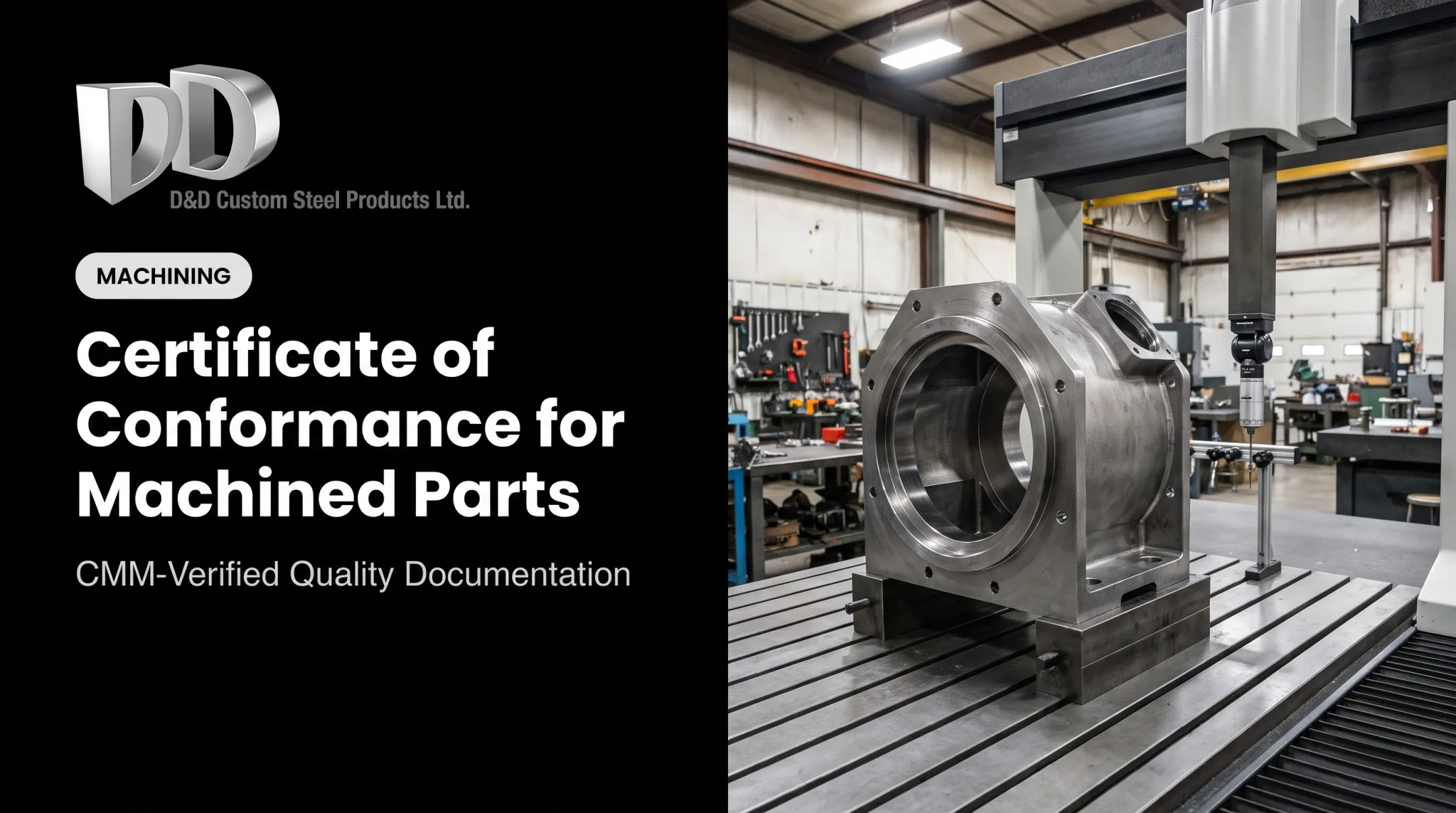
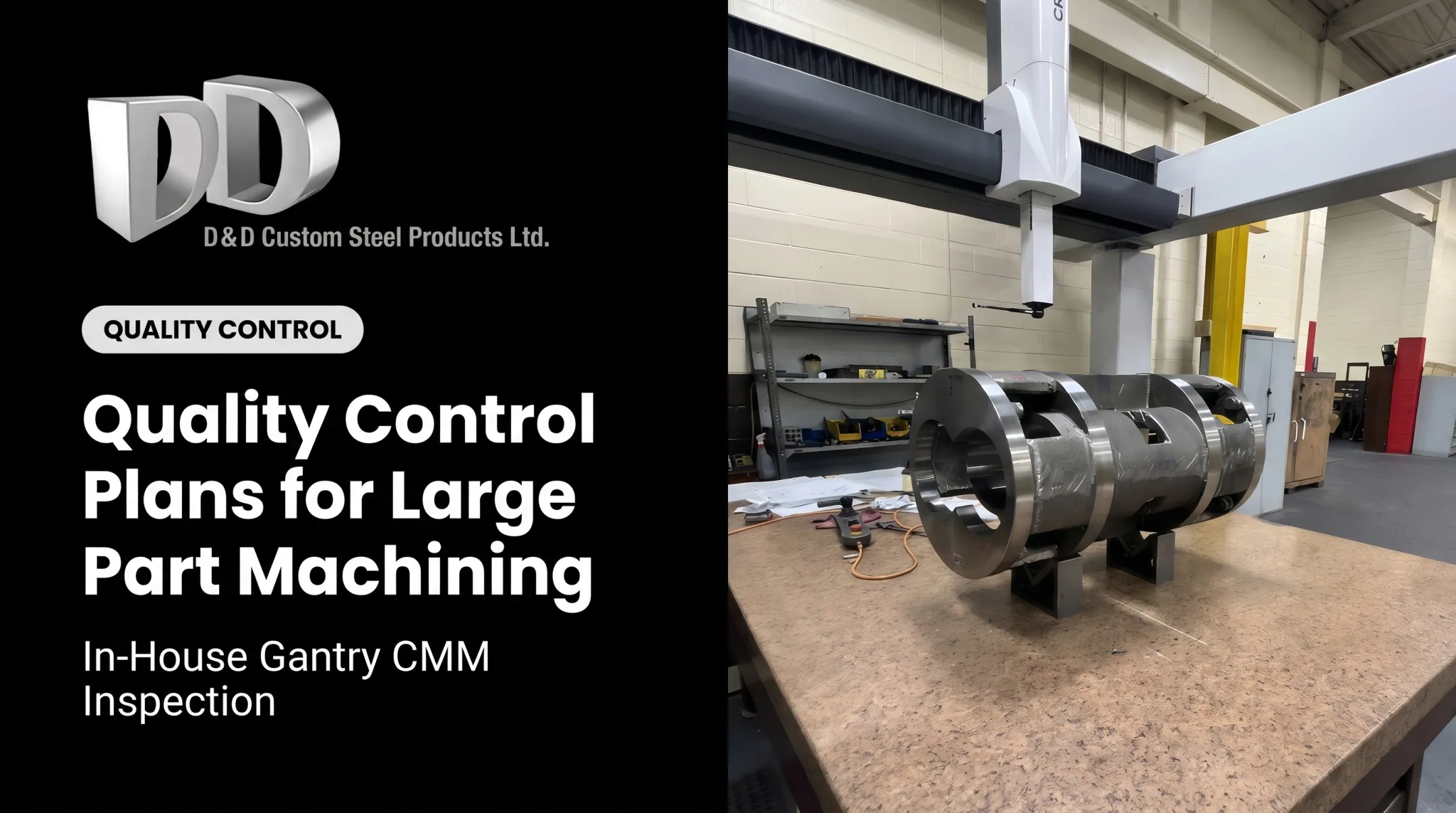
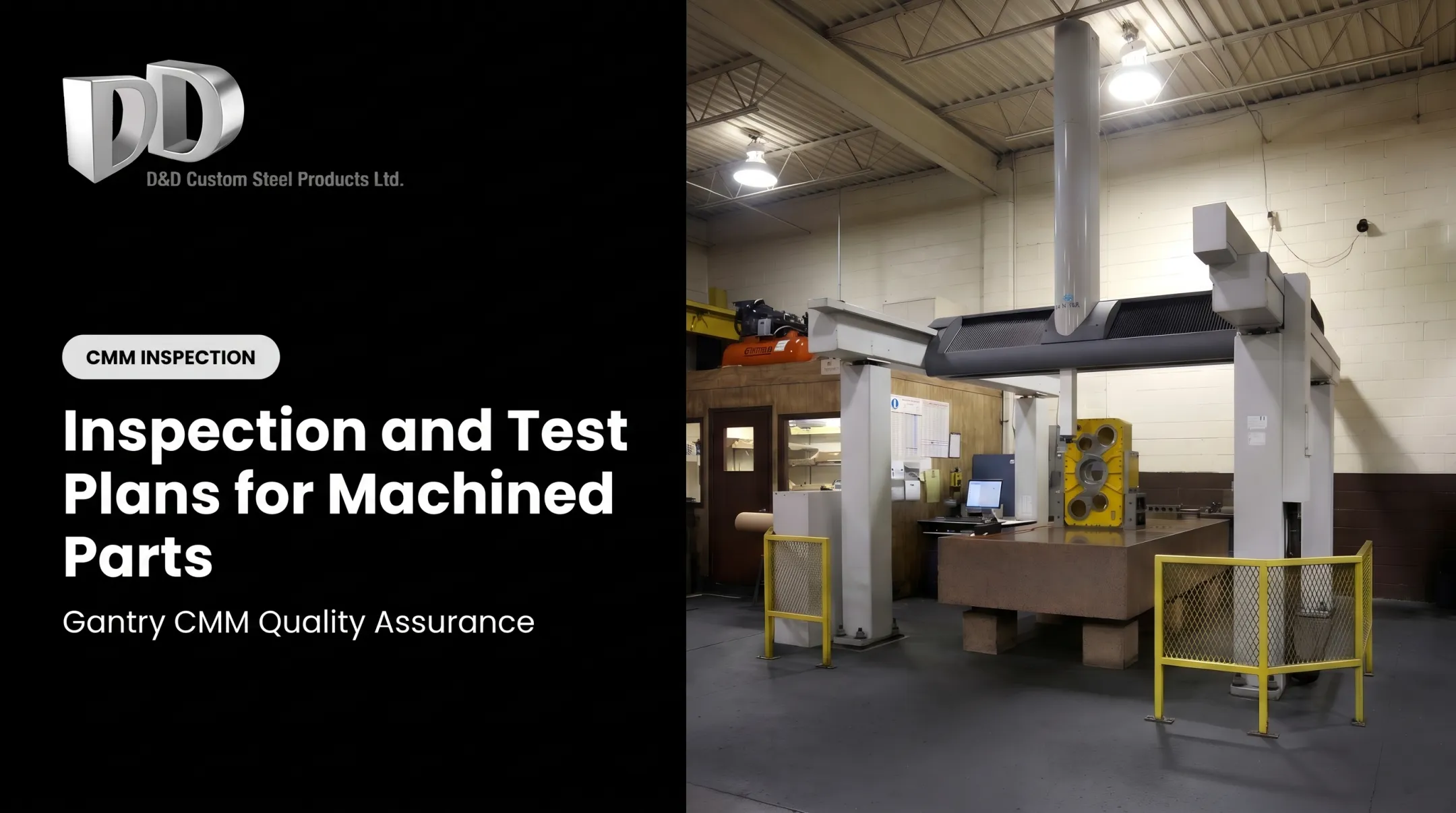
D&D holds ISO 9001:2015 certification. A quality specialist performs inspection at every production step on an in-house DEA Alpha Image gantry CMM, with travel of 78.7 inches (X), 128.9 inches (Y) and 59 inches (Z).

Dimensional verification stays inside the machining workflow. Detailed inspection reports and other quality documentation are available as required.
Where it fits
- Industrial pump and fluid-handling parts, such as split and volute casings, bearing frames and wear plates
- Mining and drilling equipment components, such as gearbox housings and rotary head parts
- Power generation and nuclear components with strict inspection and documentation needs
- Heavy industrial machinery and MRO replacement parts
- Finish machining of bores, faces and mounting surfaces on weldments and fabrications

To assess fit, send drawings, materials, tolerances, expected quantities, inspection requirements and delivery targets. D&D can then discuss a suitable machining approach. Reach the team at (905) 664-4245 or info@ddcustomsteel.com.
Conclusion
The best long-term machining partner is the one whose capabilities, quality system, capacity, communication and commercial approach match your production priorities. Popularity and the lowest first quote are poor proxies.
Choose a supplier that repeatedly delivers conforming parts and responds constructively when requirements change. Then hold periodic reviews of quality, delivery, communication, cost and capacity so the relationship keeps improving.
Frequently Asked Questions
What is a manufacturing partner?
An external supplier that produces components or products to your specifications. It may also support engineering, quality, production and ongoing supply.
What is OEM and how does it differ from ODM and non-OEM?
An OEM makes or sells products under its own specifications or brand. An ODM designs and manufactures products for another brand. A non-OEM component supplier can support either model.
What are hybrid machining processes?
Hybrid machining combines two or more methods or energy sources in one coordinated process, such as additive deposition plus cutting. Confirm the process suits your material, geometry, tolerances and volume.
How much does custom CNC machining cost?
Cost depends on material, size, complexity, tolerances, programming, setup, machining time, inspection, quantity, finishing and delivery. Request a quote from complete drawings and specifications, not a generic price.
What should I ask a machining partner before starting a long-term relationship?
Ask about equipment fit, comparable parts, quality controls, inspection documentation, capacity, lead times, communication, change management and references. Also ask about prototype or first-run evaluation.
How do I evaluate a machining partner's quality system?
Review certifications and certificate scope, inspection equipment, calibration, in-process controls, nonconformance and corrective-action procedures, dimensional reports and document control. Look for proof quality holds across repeat production.